
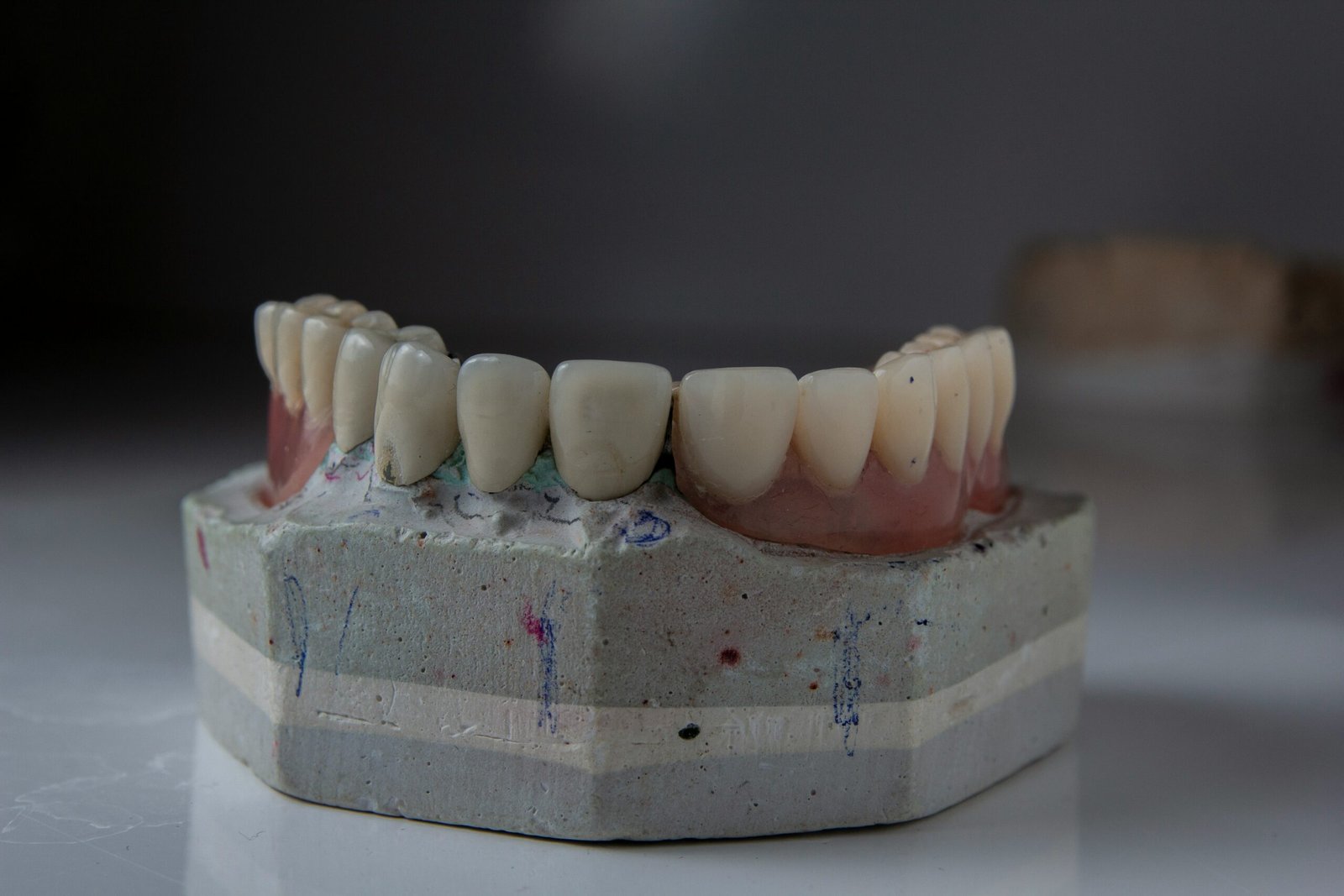

If you have multiple missing teeth and you’re seeking a reliable replacement option, Vision Dental recommends implant bridges.
Missing several teeth can make chewing, speaking, and smiling more difficult. Implant bridges offer a way to replace multiple missing teeth using dental implants for support, helping restore everyday function and the appearance of your smile.
An implant bridge, also known as an implant-supported bridge, is a prosthesis similar to conventional teeth bridges. However, there is a distinct difference between these two; while healthy natural teeth support traditional teeth bridges, an implant bridge is supported by titanium implants.
Implant-supported teeth bridges over several advantages over traditional bridges. First, the placement of conventional bridges requires sacrificing the natural tooth structure supporting this. This can lead to long-term complications such as tooth decay and periodontal problems in the supporting teeth. Secondly, tradiimplant-supported bridges are stronger than traditional teeth bridges. As a result, they are liable to fracturing more often than implant-supported ones. Finally, since the implants are placed directly into the jawbone, they optimally restore one’s ability to chew and digest food, compared to regular teeth bridges.
The best thing about implant-supported bridges is that you don’t need an implant for each missing tooth; instead, a bridge can be supported by only two or three implants placed strategically.
The process of getting missing teeth replaced with implant-supported bridges is typically carried out in two phases.
In the first phase, we will perform a detailed clinical examination and prepare a fully-customized treatment plan. In the next appointment, we will implant surgical templates to insert the implants in the jawbone under local anesthesia. For extremely apprehensive or uncooperative patients, conscious sedation may also be considered to relax them. After implant insertion, healing collars will be placed over them to ensure optimal healing. A temporary bridge will also be placed over the implants to restore your facial aesthetics.
After a few months, when healing has taken place, we will remove the temporary bridge and replace it with a pre-fabricated permanent one. This is known as delayed implant loading. Sometimes, our dentists may load implants with a bridge immediately after insertion. This is called immediate implant loading. However, this technique is not practiced routinely as not everyone is a suitable candidate.

Your treatment is planned around your oral health, the number of missing teeth, and your individual goals.

An implant bridge can restore several missing teeth using a planned number of dental implants.

Unlike a removable denture, an implant bridge is designed to remain in place during normal use.

The bridge is designed to complement your remaining teeth and smile.

Understand the treatment process, expected healing time, maintenance requirements, and available options before proceeding.

Regular dental check-ups and good daily cleaning habits help maintain the health of your gums and implant-supported restoration.
Congratulations! You are now an owner of a healthy and beautiful smile. You can also use your implant-supported bridge to eat all your favorite foods.
Don’t let your missing teeth affect your self-confidence and personality. Visit us today to discuss your tooth replacement options with us and walk away with a smile you – and everyone around you – will absolutely love!
A traditional bridge usually relies on neighbouring teeth for support. An implant bridge is supported by dental implants placed in the jawbone.
The number depends on the length of the bridge, the location of the missing teeth, bone quality, and your treatment plan. Not every missing tooth requires an individual implant.
Not everyone is a suitable candidate. Your dentist will assess your gum health, bone support, medical history, and oral hygiene before recommending treatment.
Treatment is generally performed with appropriate local anaesthesia. Some discomfort, swelling, or tenderness can occur afterward, and your dentist will explain how to manage recovery.
Treatment can take several months because implants often need time to integrate with the jawbone before the final bridge is fitted. The timeline varies between patients.
Their lifespan depends on oral hygiene, bite forces, general health, and regular professional maintenance. The bridge and implants may require maintenance or repair over time.
Brush twice daily and clean carefully around and underneath the bridge using suitable interdental brushes, flossing aids, or other tools recommended by your dentist.
They offer different benefits. An implant bridge is fixed in place, while a denture may be removable. The right option depends on your oral health, preferences, suitability, and budget.
Check out our Smile Gallery