Root Canal Treatment in Menai
At Vision Dental, we aim to prevent dental problems in our patients in the first place. That is why, our focus is on preventive dental treatment instead of restorative treatment. However, we often come across cases that require saving grossly damaged teeth. To save these teeth from extraction we perform a procedure called root canal treatment to save these teeth from extraction.
One of the most common problems we observe in our patients during routine checkups is worn-down teeth. This condition, also called tooth wear, occurs when there is a progressive loss of the tooth structure from the biting surfaces.
When is a Root Canal Procedure Needed?
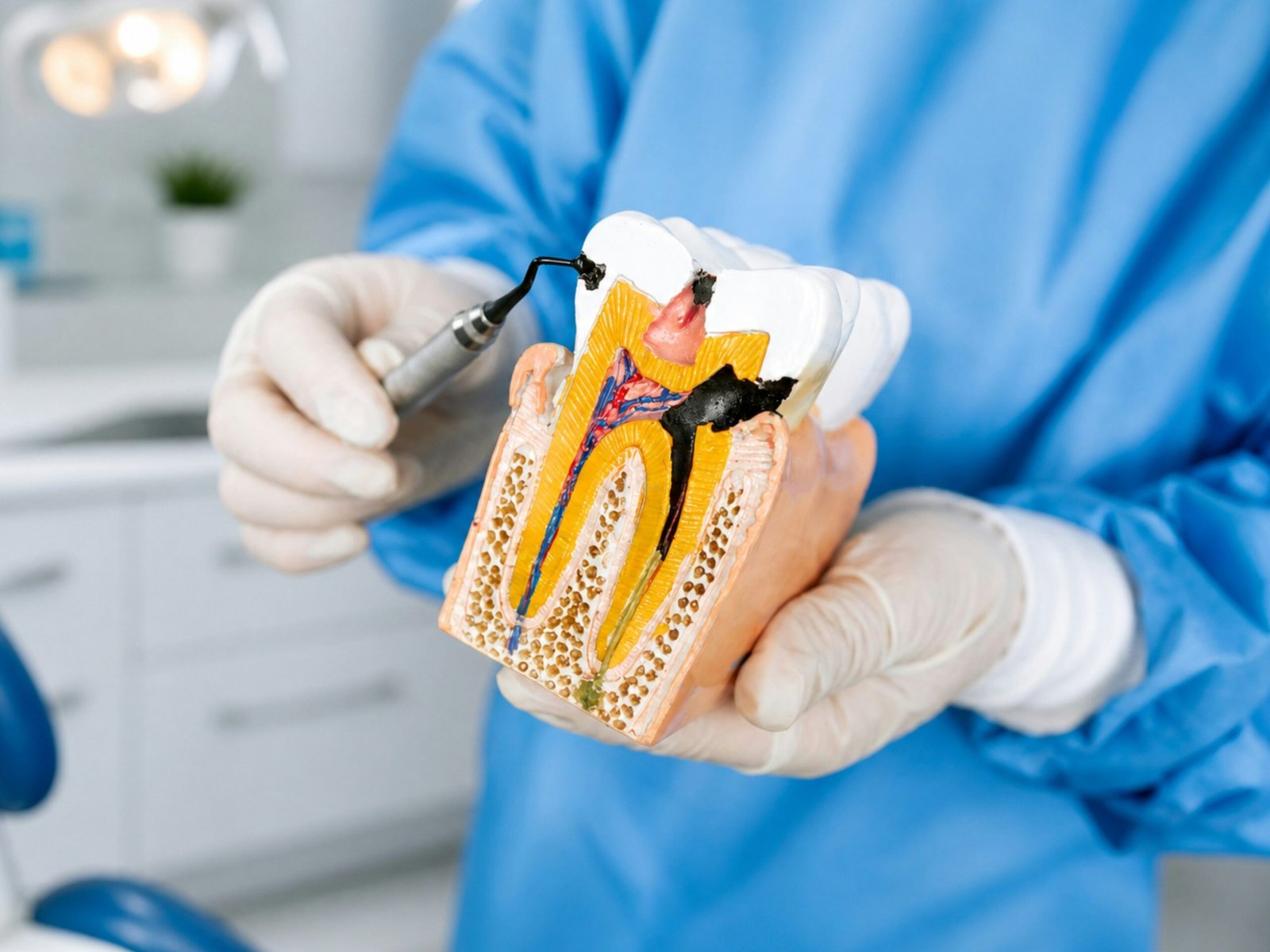
A root canal procedure is needed when the tooth’s innermost tissue, the dental pulp, becomes inflamed. Healthy teeth are protected on the exterior by a hard, highly mineralized layer called enamel. This enamel protects the underlying, softer layers, dentine, and pulp. However, when oral hygiene maintenance is ignored or results in tooth decay, the enamel layer is destroyed, and the dental pulp gets exposed to the oral environment leading to severe pain and swelling. Initially, this pain is transient and goes away after the hot or cold stimulus is removed. However, if this condition is not treated timely, it can result in irreversible pulp inflammation. At this stage, the only option to save the tooth is to perform root canal treatment.
Who Can Benefit from Root Canal Treatment?
Tooth wear may seem like a straightforward issue that does not affect oral health. However, the fact is that untreated tooth wear can significantly affect one’s dental and physical health. Some of the consequences of tooth wear are:
Persistent Toothache
Ongoing or severe tooth pain may indicate inflammation or infection inside the tooth and should be assessed by a dentist.
Prolonged Tooth Sensitivity
Sensitivity to hot or cold that lingers after the source is removed can sometimes indicate damage to the tooth’s pulp.
Deep Tooth Decay
When decay extends into the pulp, root canal treatment may be recommended to treat the affected tissue and help preserve the tooth.
Dental Injury or Infection
A cracked or injured tooth may develop pulp damage, while swelling or an abscess can indicate infection that requires prompt dental assessment.
What is the Procedure for Root Canal Treatment?
Root canal treatment is typically performed in 2-3 sittings. However, for some teeth, it may be completed in a single sitting. First, we will examine the affected tooth and look at its x-ray images. This will help us visualize the tooth’s internal structure and identify the extent of the inflammaiton.
Since the root canal is a surgical procedure, we will perform it under local anesthesia to make you relaxed and pain-free. The first step in the procedure is to drill a hole over the tooth’s biting surface and gain access to the pulp chamber. Next, we will use specialized instruments to remove the inflamed pulp and thoroughly wash and dry the tooth’s interior. Then, we will place a medicament into the hollow tooth and apply a temporary filling.
At the next appointment, we will assess the extent of the healing. If sufficient healing has occurred, we will use special instruments to shape the root canals, followed by washing and drying. Afterward, we will place an inert material called gutta-percha into the tooth’s interior and place a temporary restoration.
After a few days, when the pain and swelling have gone completely, we will replace the temporary restoration with the permanent one.
Many people think that a root canal is a painful and inconvenient procedure. This is not true; it is painless if performed by an experienced and qualified dentist. If you’re looking for a specialist root canal dental practice in Vision Dental is your best choice. So, book your appointment today and take your first step towards a healthy and charming smile.