
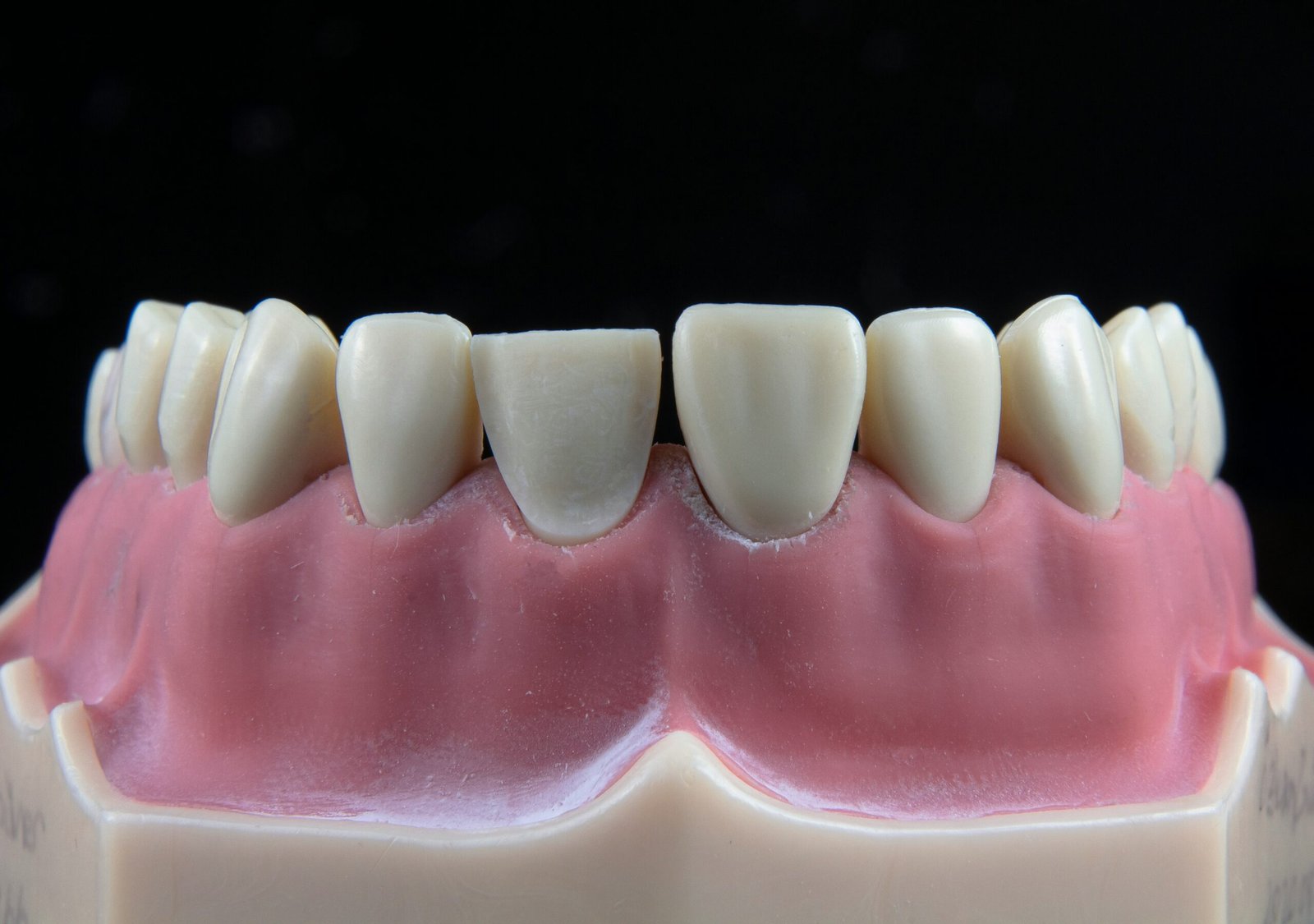

Our teeth not only help with eating and speaking and are crucial for making us look beautiful when smiling. Unfortunately, while some people are naturally blessed with perfectly shaped, pearly white teeth, others are not that lucky. If you have blemished or chipped teeth ruining your smile and self-confidence, there is no need to worry. Porcelain dental crowns can help you get rid of cosmetic teeth defects and enjoy a charming and lasting smile.
At Vision Dental, we understand the importance of a healthy, complete smile. Whether you have a chipped tooth, a heavily restored tooth or one or more missing teeth, our team can assess your dental needs and discuss suitable treatment options to restore your smile.
According to the American College of Prosthodontists, a dental crown is a cap-shaped structure that sits over the visible surface of the teeth and is used for restoring the shape, esthetics, and function of grossly damaged teeth. Dental crowns are one of the most commonly utilised restorative options for fixing blemished smiles.
A dental bridge is a fixed restoration used to replace one or more missing teeth. Depending on the type of bridge, it may be supported by neighbouring teeth or dental implants.
Your dentist will assess your oral health and recommend an appropriate restoration based on your individual needs.
Porcelain crowns can fix a variety of dental restorative and cosmetic issues. The Australian Dental Council recommends dental crowns to fix the following problems:
A crown may restore the shape and function of a tooth that has been significantly damaged by injury or decay.
A crown may help protect a weakened tooth when a large filling leaves insufficient natural tooth structure to support normal chewing forces.
Some teeth may require a crown after root canal treatment to protect the remaining tooth structure and restore function.
A dental bridge can replace one or more missing teeth, helping restore your smile and chewing function.
The process of getting one’s teeth restored with crowns is straightforward, and it is typically completed within 2-3 sittings.

at your first appointment, we will perform a thorough clinical examination of your teeth to determine whether you can benefit from dental implants. We will then prepare a fully-customized treatment plan for restoring your teeth.

Next, we will remove a thin layer of the outer tooth enamel to create space for attaching the crowns. Since only a thin layer of the enamel will be removed, it will not make your teeth sensitive or weak. Typically, there is no need for anesthesia during tooth preparation for crowns. However, if we observe that the remaining tooth structure is very close to the pulp, we will administer local anesthesia to make you pain-free.

after tooth preparation, we will make digital impressions of your teeth. We will also record the precise shade of the neighbouring teeth so that your crowns blend in perfectly. This information will be sent to the dental laboratory for crown fabrication. Temporary crowns will be placed on the teeth to restore your facial esthetics while the permanent crowns are being fabricated.

at the final appointment, we will remove the temporary crowns and permanently bond your permanent crowns using adhesive.
Restorative dental treatment should address both function and appearance. At Vision Dental, we focus on understanding your needs and helping you choose an appropriate treatment option.

We assess your dental condition and discuss suitable restorative options based on your needs and goals.

Porcelain restorations can be selected to complement the colour and shape of your surrounding teeth.

Appropriate crowns and bridges can help restore chewing function and protect or replace affected teeth.

We check the fit, bite and appearance of your restoration and make appropriate adjustments where necessary.

We explain the procedure, expected timeline, costs and aftercare requirements before treatment begins.

We provide guidance on cleaning your restorations and maintaining healthy teeth and gums.
At Vision Dental, we ask our patients to take care of the following things to enhance the life of their crowns.
A crown covers an individual tooth to restore its strength, shape and appearance. A bridge replaces one or more missing teeth and is supported by neighbouring teeth or dental implants, depending on the design.
Their lifespan varies depending on the materials used, oral hygiene, bite forces and daily habits. Regular dental check-ups and good home care can help maintain your restoration.
Local anaesthesia is commonly used when preparing a tooth for a crown. Some temporary sensitivity or discomfort may occur afterwards. Your dentist will explain what to expect during recovery.
Treatment commonly involves more than one appointment, particularly when a restoration is made in a dental laboratory. The exact number depends on the restoration and the treatment process used.
Yes. A crown can improve the shape, colour and appearance of a tooth when restoration is clinically appropriate. Your dentist will discuss whether a crown or a more conservative option is suitable.
Yes. Certain bridge designs can replace more than one missing tooth. Suitability depends on the number and location of missing teeth and the condition of the supporting teeth or implants.
Brush twice daily with fluoride toothpaste, clean between your teeth every day and attend regular dental check-ups. Bridges require particular attention to cleaning underneath the replacement tooth, and your dentist can recommend suitable tools.
Not every tooth requires a crown. Your dentist will assess the amount of remaining tooth structure, gum health, bite and other factors before recommending treatment.
Check out our Smile Gallery